
Does Luke 6:38 mention grace? The verse is familiar to many, but my question may seem odd. Let’s see…
Did you ever check out on a class lecture? Maybe you checked out when a parent was talking? Why do people do that? Because they are sure they already know everything the speaker is going to say.
Luke 6:38 is misunderstood and one problem is familiarity. It’s challenging to help people grasp what it means when their tendency is to check out before the explanation begins. If you are still reading you haven’t checked out (Thank You!) and blessings are in store. So, stay with me! 🙂 There is much more to this promise than you have thought.
What Does It Say About Grace?
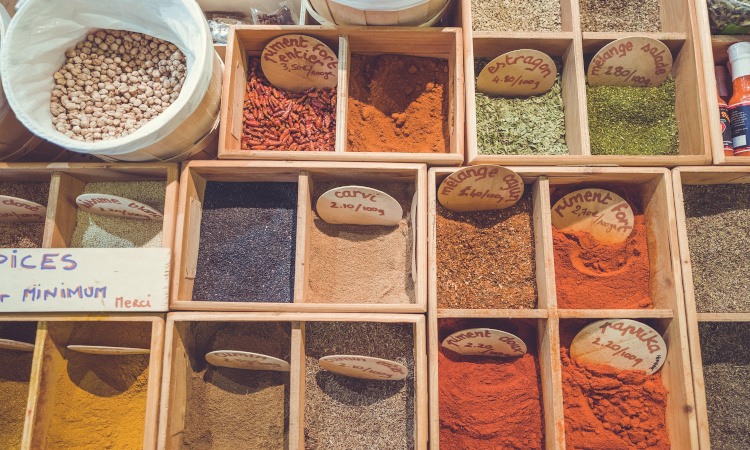
 To know that, one must have some knowledge of middle eastern markets. Our purchases come prepackaged and they are sold by weight. The open air markets of Jesus’ day (and many today) sell goods by volume. Let me illustrate with a simple, common market purchase of grain.
The buyer arrives at the market. Sellers have their goods spread out for inspection. They begin to haggle (this scene is still played out today). When an agreement is reached, the buyer brings out his container (no plastic bags from Wal-Mart!). The buyer scoops some grain into his container. At this point, things get interesting.
The buyer’s container appears to be full. If you were to inspect your kitchen cabinets, it wouldn’t take long for you to find some version of the phrase below:
Contents may have settled during shipping
 The buyer shakes his container. Sure enough, the contents settle and the container is no longer full. He scoops up more grain and pours into his container. But all the grain doesn’t fit. It begins to overflow when the container is full. No worries! All of this has taken place over the lap of the buyer.
And now, I’ve just confused everyone who wears pants or dresses. In Jesus’ day, robes were gathered in the front to carry things. You might say robes were used as a built-in shopping bag. Well, our buyer’s container is now full and he has caught the overflow in his lap. He goes home with both!
That is the imagery Jesus used to teach us how God gives to us. And every gift of God is an expression of His grace. It’s quicker to illustrate this to a modern reader by thinking about brown sugar. Cooks know brown sugar is measured into a cup and pressed down and packed in. The first measurement of brown sugar is never what it appears. The pack-down has to take place before the measurement is accurate.
Grace On Display
God is showing how He intends to reward our obedience. It’s grace on display. Luke 6:30 says we are to give to everyone who asks of us. So we know:
- God expects obedience
- God rewards obedience
- When you give, God gives back to you
- God uses your own measure in order to give to you

Applying the principles: Do you give to others from a teacup or a five-gallon bucket? Shorter version: Do you give like your Father does?
What It Does NOT Mean
Our Father gives. He is the Perfect Father Who knows how to give good gifts to His children. Only He can do exceedingly and abundantly more than we can ask or imagine (Ephesians 3:20-21). He rewards those who seek Him (Hebrews 11:6-7). All of this is true. But Luke 6:38 does not say our Father rewards us in kind. A common misapplication by some name-it-claim-it TV evangelists goes like this:
If you’ll give God $100, He will pay you back with $1,000.00
It’s questionable if anyone but the evangelist got any of the first $100.00. The proportion of reward in the illustration is certainly within God’s ability. He can even do much more. However, there is no place (including Luke 6:38) where God promises to give us more of the same things we give to Him.
That thought belittles Him. He can and will give us the best gifts. That may or may not be something similar to what we gave. That puts His giving into the unpredictable, unimaginable category. And that’s exactly where you want it!
Soli Deo Gloria!
